
Mini Badges
Show off just how smart you are, by learning for these badges and proving to your instructor that you know lots about horses. These badges are smaller in size than the other badges, have a purple outside edge, and help you prepare for your D and D+ efficiency test. These cute introductory badges can be sewn on your Pony Club branch or centre shirt.
There are over 40 badges that you can do. You will be awarded the MINI BLUE CROSS equine welfare badge once you have completed the specific 10 badges required, and remember that once you have done 14 mini badges you get our special MINI GOLD BADGE.

Obtain the syllabi, and in some cases the workbooks, from your DC, and get your instructor or a parent to work through it with you. Listen carefully to what they tell you, watch closely what they show you, and try it yourself till you get it right! Have fun!

Badge Name: Bandages and Rugs
Description: Which ponies might need rugs. To identify a tail and stable bandage.

Badge Name: Basic Needs of Ponies
Description: To know what ponies need to live and be comfortable in summer and winter.
Badge Name: Beach Riding
Description: Be able to help adults plan an outing to the beach and know what to take and who could help on the day. Note that this badge is not currently available.
Minimum Age: 5

Badge Name: Birds (SA)
Description: Recognise and colour the five most seen birds in South Africa
Badge Name: Blue Cross Equine Welfare
Description: Awarded to members who have successfully completed the following 10 Mini Badges: Horse Clothing; Care of the Foot; Feed Your Pony; Pony Health; Leading and Handling; Tack Cleaning; Points of Tack; Mucking Out; Basic Needs of Ponies, Summer and Winter; and Pony Behaviour.


Badge Name: Camping
Description: To be able to assist with setting up and taking down a campsite. To have a basic working knowledge of safety and the Countryside Code

Badge Name: Care of the Foot
Description: Recognise and point to 3 parts of the foot Know how and why to use a hoof pick and skip bucket Know how and why to apply hoof oil Know if a pony is shod or unshod
Minimum Age: 9+

Badge Name: Colours & Markings
Description: Be able to identify basic colours – black, bay, grey, skewbald, piebald, chestnut. Be able to identify facial markings – star, stripe, blaze, snip. Be able to identify leg markings – sock and stocking. In pairs, on a drawing of an outline of a horse, colour in the horse with the colour and markings specified by your instructor.

Badge Name: Dressage Arena
Description: To know the letters around a dressage arena.
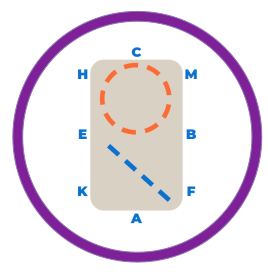
Badge Name: Dressage Movements
Description: The simple school movements that are used in an arena.

Badge Name: Equipment Safety
Description: Know it is important to wear hats, body protectors and correct boots. Know how to recognize unsafe, worn or damaged saddle and bridle.

Badge Name: Farming
Description: Identify 5 farm animals: pigs, cow, hen, sheep & goat Match the animal to their housing eg shed, pen, coup, sty Name the animals young eg piglet, chick Name 3 pieces of farm equipment eg tractor, plough Make a basic model of a farm through pictures or visiting a farm

Badge Name: Feed your Pony
Description: Feed from a flat hand. Clean and fill a water bucket. Recognise hay/haylage. Recognise chaff & salt. A basic understanding that water and fibre are essential to a pony’s diet.
Minimum Age: 9

Badge Name: Field Safety
Description: To create awareness of the appropriate way to act when dealing with ponies which are turned out to ensure safety and welfare of both ponies and other people.
Minimum Age: 9+

Badge Name: Fire Safety
Description: Knowledge of possible causes of stable fires. Know what to do if you discover a fire. Recognise basic fire fighting equipment. Be aware of what you can do to help prevent a fire
Minimum Age: 8
Badge Name: Gold
Description: This Mini badge is awarded once the member has completed the designated number of Mini Badges. The list of badges must be supplied to the regional committee for approval, on the form supplied on the documents page of the website.

Badge Name: Grooming
Description: Recognise and use: hoof pick (assisted), dandy brush, rubber curry comb, mane comb, sponge, body brush and water brush

Badge Name: Horse Clothing
Description: Recognise at least 2 types of rug, eg stable, turnout and summer sheet Recognise at least 2 types of exercise boot, eg tendon, overreach and travel Recognise a tail bandage Know how to fasten a rug Have knowledge of how to measure your pony to fit a rug
Badge Name: Leading and Handling
Description: How to put on a head collar, lead and tie up a pony.

Badge Name: Learning Theory
Description: What a reward is for a pony and when to give a reward.

Badge Name: Loading
Description: Understand how to help and be safe when your pony is being loaded or unloaded by an adult.

Badge Name: Mucking Out
Description: Recognise and use manure scoops/skips/rubber gloves/yard brushes/wheelbarrows Be able to skip out a stable safely when pony is tied up Asist with sweeping the stable yard and correct storage of tools Assist with picking up dropping from paddocks as part of a grassland management regime
Minimum Age: 8
Badge Name: Native Breeds
Description: To be able to recognize local native breeds.

Badge Name: Pet Sense
Description: Be responsible for the daily care of a pet for one month. Explain how and when you feed and clean it’s home. Take photographs of your pet during exercise, play and training, if appropriate. Explain how you would recognise if your pet was unwell or injured and where you would get help and advice

Badge Name: Plaiting
Description: Explain why you might plait horses’ manes or tails. Know how to make sure you are safe when plaiting. Show how to plait using baling twine and a plaiting band. On a drawing of an outline of a horse, draw on plaits and colour in the picture.
Minimum Age: 8

Badge Name: Points of Tack
Description: Show and Name: Bridle: reins & noseband Saddle: stirrup, girth & pommel. Note that this badge was previously called mini SADDLERY.
Badge Name: Points of the Pony
Description: Show and name six points: ears, eyes, nostrils, mane, tail & hoof

Badge Name: Poisonous Plants (SA)
Description: Find and identify 4 poisonous plants eg privet, acorn, oleander and pig ears Draw, label and colour a picture of each or pick samples, press & label
Minimum Age: 9+

Badge Name: Ponies Teeth
Description: That ponies have two types of teeth which grow throughout their life and need to be checked every year for sharp edges.

Badge Name: Pony Behaviour
Description: To recognise when a pony is angry, happy & sad To understand how ponies live in the wild as part of a herd To have knowledge of safety around a pony, eg where to stand, how to approach the pony and the reasons for this
Minimum Age: 8

Badge Name: Pony Health
Description: To know if your pony has signs of good health.
Badge Name: Rider Safety
Description: What it is safe to wear around ponies, where it is safe to walk around ponies, how close it is safe to ride to the pony in front.

Badge Name: Road Rider
Description: To have knowledge of: basic signals (left, right and thank you) Safety equipment – (hi viz, tack and boots) Where to ride and what to take with you (cell phone, hoof pick)
Minimum Age: 8

Badge Name: Saddlery
Description: Show and Name: Bridle: reins & noseband Saddle: stirrup, girth & pommel. NOTE that this badge is being re-named as POINTS OF TACK.

Badge Name: Sequence of footfalls
Description: Learn the amount of beats for each pace. In a group of four (one person per foot), shake a bottle of pebbles when that foot should touch the floor for each pace

Badge Name: Social Licence to Operate
Description: To know that we must be always kind towards our ponies. If we are not, people may be watching us and think we should not ride ponies.
Badge Name: Tack Cleaning
Description: Know why you should clean tack, the tack cleaning equipment needed and how to wash a bit and brush a girth.

Badge Name: Trimming
Description: Why ponies are trimmed and which parts of the pony are trimmed.

Badge Name: Wellbeing
Description: Personal Wellbeing, including: To understand that it is important to drink enough; To know which snacks to eat or not to eat; To know how to avoid sunburn; To know that being kind to people makes everyone happier; Inclusion, treat everyone equally; Listen to and respect other people’s opinions and values and cultures; Respect the roles of people who help us; Recognising achievements and challenges.

Badge Name: Wildlife (SA)
Description: To be able to identify 8 species of wild animals in SA

Badge Name: Working Dogs
Description: To recognise at least 4 working dogs, eg spaniel, Labrador, terrier and German Shepherd Have knowledge of what a working dog does eg gun dog, guide dog, police dog Collect pictures from a magazine or draw the working dogs and say what job they might do
Badge Name: Yard Safety
Description: To create awareness of the appropriate way to act on a yard with a number of ponies to ensure safety and welfare of both ponies and other people. This is an ideal precamp badge.
Minimum Age: 9+
Achievement Badges

Our achievement badges, with a dark blue outside edge, cover a series of topics revolving around many subjects to do with horses, horse care, competition, and safety. Some are highly recommended to be done as preparation towards your efficiency test certification, in particular the D+ and C tests but there are also some that introduce C+ topics. Others are for widening your knowledge and interests.
Many of these topics were started in the Mini Achievement Badge program, so if you have joined Pony Club as an older member, look at those first to see what you might have missed and should do now. Or just check out the Mini program as a refresher.
Go to the documents page for a list of where the various achievement badges fit in with relation to the efficiency tests.
You can also aim to earn your PONY CLUB BLUE CROSS badge. This Equine Welfare Merit Badge is awarded to any member who has passed all of the following Achievement Badges:
- Bandaging & Rugs
- Care of the Horses Foot
- Feeding
- First Aid (Equine)
- Grooming (previously Handling and Grooming)
- Lorinery
- Mucking Out
- Perfect Paddock
- Saddlery
- Shoeing
When you hold this badge, it means you know enough to be able to safely look after a horse on your own. This is an achievement to be proud of!
We have workbooks available for these badges. But also discuss the topics with your riding instructor, your branch or centre instructors, or other horsemen or horsewomen that you respect, to get more information and more ideas on the topic. Everybody has ideas around how to do things better; listen, discuss with your pony club friends, watch, do, and learn!
Have fun with the workbooks, which can be requested from your branch or centre and delivered into your email inbox. You start here with your journey to being a true horseman or horsewoman!
Achievement Badges currently Available:
Click here to view the full list of Achievement Badges.
Advanced Badges
This is the final level of awarding training badges. These badges have a mustard colored outside edge.
Some of the badges would have started as a mini badge, progressed on to an achievement badge and are now finishing as an advanced badge. You will need to have done at least the achievement badge before tackling the advanced badge.
There will also be badges here on new topics that are specifically meant for our senior members. They will cover topics required only from the C+ to A test.
The syllabi for these advanced badges may be obtained from your branch DC.
Badge Name: Bandages and Rugs
Description: How to put on stable and travel bandages. How to apply travel boots. How to measure and choose rugs.
Badge Name: Care of the Foot
Description: Know the names of the parts of the foot, recognising a hunter shoe and its functions, recognising lameness and some symptoms.

Badge Name: Colours & Markings
Description: To recognise some less well-known colours. Know that colours and marking are used as a method to identify horses on their passports.
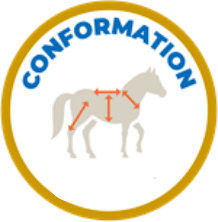
Badge Name: Conformation
Description: To know and understand various equestrian terms used for describing a horse’s conformation.

Badge Name: Equine Dentistry
Description: Know the structure and function of the teeth, recognize, and know how to manage problems, age horses.

Badge Name: Equipment Safety
Description: Now the importance of correctly fitting, appropriate safety equipment and how to check for safety and recognise any issues.
Badge Name: Field Safety
Description: Further understanding of how to enhance safety when handling horses/ponies in the field.

Badge Name: Grooming
Description: Better understanding of why and how to groom and which items of grooming kit are suitable for some horses and ponies.
Badge Name: Learning Theory
Description: To understand what learning theory is and how it can be used to train horses and ponies.

Badge Name: Loading
Description: Prepare a horse or pony for travel. Safely load and unload a horse or pony.

Badge Name: Lungeing Equipment
Description: To be able to fit tack and equipment for lungeing correctly and be able to handle lungeing equipment safely and effectively.

Badge Name: Mucking Out
Description: To be able to muck out, keep a stable area clean and tidy and talk about the effect of dust on condition.
Badge Name: Poisonous Plants
Description: To know where some poisonous plants may grow and which are most likely to grow in your area. Further understanding of when horses and ponies eat poisonous plants and what some of the symptoms of poisoning may look like.

Badge Name: Sequence of Footfalls
Description: To understand and show knowledge of the sequence of footfalls in all paces.

Badge Name: Social Licence to Operate
Description: To know what a ‘Social Licence to Operate’ is and to understand how it affects the way we work with horses.

Badge Name: Understanding Training
Description: To understand the importance of the way of going in horses and ponies, how to recognise the correct way of going and to understand the application of the Scale of Training.
Badge Name: Well Being
Description: To know what points can help with a feeling of wellbeing.
Badge Name: Yard Safety
Description: To become more aware of external influences that upset horse/ponies. How to be safer on the yard.
Competition / Sports Badges
These square badges (gradually being changed to round badges) cover the various types of competition undertaken at Pony Club and provide guidelines for competing successfully. There are two levels offered. The Introductory badges, with a pale blue edge on the old badges and a purple edge on the new badges, will help you to understand the basics of a particular competition discipline. This badge assumes you are just starting out in the discipline, and helps you to prepare to start competing. The Competition badges, with a yellow edge on the old badges and a dark blue edge on the new badges, assume that you have some experience in the discipline, and are either about to start or have already started, competing in that discipline. The badge will help you understand the rules of the discipline, and give you some guidelines about what is expected from you as rider, and your horse; in order to be successful in competition.
The disciplines, in which these competition badges are available, are:
| Dressage | Intro to Dressage |
|---|---|
 |
 |
It is a good idea for you to complete the Dressage Arenas Achievement badge as your first step in this discipline.
| Eventing | Intro to Eventing |
|---|---|
 |
 |
| Mounted Games | Intro to Mounted Games |
|---|---|
 |
 |
| Show Jumping | Intro to Show Jumping |
|---|---|
 |
 |
It is a good idea for you to complete the Building Show Jumps Achievement badge as your first step in this discipline.
| Tetrathlon | Intro to Tetrathlon |
|---|---|
 |
 |
Progressive Tests
There are four sets of progressive tests, bronze, silver, gold and platinum; and a certificate is provided as you go through the levels. These are optional tests and can be taken between efficiency tests, to help you prepare. The syllabi of the progressive tests allow you to progress in small steps from one efficiency test to another, and as such are an excellent way to ensure that you have covered everything you will need to know in Riding and Road Sense, as well as Horsemastership, before you attempt the D, D+, C and C+ efficiency tests in turn.
The Progressive Tests are voluntary, and allow you and your Pony Club Branch committee to assess your progress towards the next efficiency test. The syllabi files for each of the progressive tests are obtainable from your branch DC.
Study and pass the Bronze Progressive Tests (level 3, then 2, then 1) before attempting the D test.
Study the Silver Progressive Tests (level 3, then 2, then 1) before attempting the D+ efficiency test.
Study the Gold Progressive Tests (level 3, then 2, then 1) before attempting the C test.
Study the Platinum Progressive Tests (level 3, then 2, then 1) before attempting the C+ test.
Congratulations, you have completed all the progressive tests!
Efficiency Tests
!!! Note NEW TESTS in OCTOBER 2023. See below !!!! These new tests have now been implemented.
A primary focus for the South African Pony Club is the structured training we provide, to encourage gradual and repetitive learning which will be retained by our members. We have tried-and-tested methods of teaching and learning, and our Efficiency Test Awards are a record of how far our members are in the learning process to becoming knowledgeable horsemen or women.
As a member, and as you proceed through the E to A level, you will be awarded a certificate, and a circle of felt that you wear behind your membership badge. The colour of the felt is changed to reflect your test level achieved. Each test builds on the previous one, so none (except the very first) can be left out. Each test has a Horse Care and a Riding component. There is a recommended minimum age for each test, although for some of the higher tests we do advise that you be older than that age so that you have a greater chance of being successful. Being older means more opportunity for gaining practical experience, and gives you the required maturity level to cope with the examination stress! At levels B and A you are qualified to work in and run a livery yard, and at A to even be employed at a breeding establishment. Our training teaches you to be able to take responsibility for the welfare of the horses in your care.
Our riding coaching is informed by the German Scales of Training, which has produced many well trained horses that are reliably a pleasure to ride. Not only will you learn to assess the stage of training in a horse, but will learn how to progress a horse through the stages, from just-backed, to a competitive athlete. Obtain the Scales of Training document here.
We are happy to be able to inform you that SA Pony Club is the development partner of EQASA and as such we are able to apply for Recognised Prior Learning in respect of their Modules 1 to 3 from our B and AH tests. Furthermore, if you have your C+ test, you are not required to have an assessment done by a CEEPSA registered coach for the ridden entrance to EQASA Module 4.
Note that the Mini Badges, the Achievement Badges, the Advanced Achievement Badges and the Progressive Tests support the members learning and progress through all the efficiency certificates. Keep track of where the badges and the efficiency certificates fit together here
The complete list of efficiency tests follows.
Please note that the syllabi of the Efficiency Tests changed at the end of September 2023. Any tests done from 1st October 2023 onward, MUST use the 2023 syllabus in order to be valid. The 2023 syllabus files may be obtained from your branch DC.
| Test | Minimum Age | Felt Colour | Objectives of Test |
| E test | 4+ years | Pale yellow | To enjoy learning about ponies. To be safe near ponies. To understand what a pony needs to be happy. To be confident both on and around ponies. To know the basic points of the pony. |
| The Progressive Bronze tests (level 3, then 2, then 1) may be taken at this time. | |||
| D Test | 8 years | Yellow | To achieve confidence in handling a pony. To achieve confidence in riding a pony. To enjoy learning about ponies. To have a basic understanding of pony behaviour. To know that is is important that ponies are healthy and enjoy life. To have an awareness of how ponies learn. |
The Road Rider Mini Badge must be done at this time, in order to be awarded the D test. The Mini Learning Theory badge should also be studied at this time The Progressive Silver tests (level 3, then 2, then 1) may be taken at this time. | |||
| D+ Test | 10 years | White | To understand the importance of putting pony welfare first. To understand the Five Freedoms of pony welfare. To have an understanding of pony behaviour. To have a basic knowledge of the care and working of a pony at grass. To begin to understand how a pony learns. To be working towards developing a balanced seat independent of the reins. . |
It is recommended that the Learning Theory Achievement Badge be studied at this time. The Progressive Gold tests (level 3, then 2, then 1) may be taken at this time. | |||
| C Test | 11 years | Green | To understand that equine welfare is important. To have some knowledge of the Five Freedoms (Domains) and why they are essential for pony welfare. To have an awareness of ponies instincts and how they affect their behaviour. To understand how a pony learns. To have a knowledge of the care and working of a pony off grass. To be working towards a secure correct balanced seat, independent of the reins, and to understand why this is important. To apply simple aids correctly. To be in control of the pony on the roads and in the countryside. To understand why there are rules for riding in the countryside. |
The Road Rider Achievement Badge is a pre-requisite for the C Test. It is recommended that the Yard Safety and Countryside Access Achievement Badges be studied at this time. The Progressive Platinum tests (level 3, then 2, then 1) may be taken at this time. | |||
| C+ Test (and C+ Horse Care Test) | 13 years | Pink | Riding Section To understand the importance of putting equine welfare first. To show some understanding of learning theory and equine behaviour. To become an enthusiastic, educated and practical rider. To be capable of riding a well-mannered pony or horse in a variety of Pony Club activities. To ride intelligently and with due regard for others on the roads and in the countryside, showing understanding of going, pace, distance, and your pony or horses level of fitness. Horse and Pony Care Section – Note that this section may be done on its own, without Riding, to be awarded the C+ Horse Care Test. To understand the importance of putting equine welfare first at all times. To understand how the Five Domains (Freedoms) affect the care of ponies and horses. To know how the behaviour of a pony or horse is affected by its environment. To understand how horses and ponies learn from previous experience. To show practical experience, or understanding and knowledge, of the care and work of a stabled horse or pony. To show practical experience and/or understanding and knowledge of the care and work of a pony or horse at grass. |
The Road Rider Certificate must already have been done, before proceeding with this C+ test. The Spurs Test must already have been done, before proceeding with this C+ test. It is recommended that the Advanced Level Achievement badges in Social Licence, Learning Theory, Equine First Aid, and Building Show Jumps is studied at this time. Riders may be required to ride other candidates ponies/horses for some flat work in the Riding Section. | |||
| B Horse Care Test | 15 years | Brown | To understand the role of safeguarding horses welfare in keeping equestrians social licence to operate. To understand your responsibility with regard to the Five Domains of horse welfare. To derive satisfaction from providing suitable care for stabled horses. To understand how horses learn and use this knowledge in the field, yard, and stable. To demonstrate practical experience and/or understanding and knowledge of the care and work of a stabled or grass-kept horse. To be capable of looking after a horse before, during, and after a strenuous days activity or competition. |
| B Riding Test | 15 years | Beige. Red only when Horse Care AND Riding have been passed | To appreciate the fun and satisfaction in developing a horses training. To understand how individual horses behaviour may require adaptations in their training. To understand how horses learn and how to use this knowledge when riding. To become an educated, effective, and practical rider who knows the reasons for what he or she is doing. To be capable of riding a well-mannered horse in a variety of Pony Club activities. To ride intelligently and with due regard for others who may be riding young, green, or untrained horses. To know and understand the basic responses for all horses to be ridden safely and successfully. To know and understand the first three points in the Scale of Training, providing a staircase of training suitable for all horses. To be able to maintain a horses way of going. To ride over a variety of fences at all paces (approx. height, 85cm). To understand your responsibilities towards equestrianisms social licence to operate. |
Note that ALL content covered in lower tests may be reassessed in this test. All members must have done and passed the Spurs Test, even if they obtained their C+ test before the Spurs Test was introduced. Riders will be required to ride and assess other candidates horses for flatwork. The FULL C+ Test must be held before a candidate can take the B Test Riding. The Spurs test must also have been done. (Note that only once the B Horse Care AND B Riding sections are passed, is the RED felt awarded). | |||
| B+ Test | 16 years | Pale Purple | To understand the importance of prioritizing equine welfare when ridden. To understand horses behaviour when ridden alone and in company. To show a balanced, secure, and harmonious position on the flat and over show jumps and cross-country fences (maximum fence height, 90cm). To ride intelligently, showing an understanding of the effects of going, pace, distance, and your horses level of fitness. To be able to assess a horses way of going on the flat and over show jumps and cross country fences up to 90cm in height. To know, understand, and implement the Scale of Training. To understand how to train a horse applying the concepts of learning theory. To understand how to shape a horses training progressively based on their acceptance / level of arousal. To be capable of developing a plan for horses training on the flat and over jumps. |
Riders will be required to ride and assess other candidates horses for flatwork. Obtain the current Lunge test syllabus HERE | |||
| A Horse Care Test | 17 years | Orange Honours: Salmon Pink | Show a wide experience of caring for and handling different types of horses and ponies. Have the experience and knowledge to be able to look after two fit competition horses, a fit competition pony, a recuperating horse, an elderly retired horse and a mare and foal turned out. Support practical work shown with logical theory relevant to the individual horses. Carry out practical work swiftly and safely showing familiarity with the tasks. Be able to lunge fresh and fit horses as a form of exercise. Understand how the systems of the horse affect daily care in fit and resting horses. Recognize the symptoms of ailments and the problems that may arise from these, and be able to undertake suitable action. Understand the implications when breeding from a mare. Be aware of modern practices; all theory must be grounded, and candidates must be able to apply their knowledge to the horses supplied during the exam. Have an understanding of current legislation in place when working with horses. The assessor will expect the candidate to show normal daily competence in their answers, but also the ability to observe any unusual behaviour or problem and to suggest a sensible solution. |
| A Riding Test | 18 years | Blue | Show a secure, correct, balanced seat on the flat and over fences. Improve all horses they work, both on the flat and over fences, including young and uncooperative horses. Be able to support the practical work shown with logical theory relevant to the individual horse. Give the assessors confidence that a horse left with the candidate would improve in its way of going. Show a clear understanding of sympathetic modern training methods based on learning theory. Have an awareness of factors (including those relating to pain, training, and management) that may contribute to various unwanted behaviours. Be able to ride an unfamiliar horse in a variety of surroundings, being mindful for the care and welfare of all interested parties. Demonstrate and evaluate training methods that are appropriate for most situations, with a diverse range of horses, including different tack options. Welfare must be at the forefront of all approaches. Discuss the safety of helpers when starting young horses. |
The A Test is the highest award of The Pony Club, and provides a comprehensive assessment of the riders horsemanship and their training of a range of horses from the ground, on the flat, and over fences. Candidates must have passed the Pony Club Tests B+, Lungeing and AH. These tests will have provided a staircase of knowledge and progression to underpin the work and riding that will be observed. This progression will have been supported by further training and practice with different coaches and with varied horses, as well as undertaking a wide range of reading, to give the breadth of knowledge required for this Test. (Note that only once the Horse Care AND Riding sections are passed, is the BLUE felt awarded). | |||
Efficiency Test Preparation and Compulsory Badges and Certificates
This section gives some information helpful with Efficiency test preparation and details the compulsory badges and certificates that have to be completed before certain efficiency tests may be done.
As you proceed through the efficiency tests in our training system, there is periodically a compulsory, prerequisite badge or certificate in Road Rider safety that you have to complete before continuing. The syllabi for each test is obtainable from your branch DC.
These are:
The Mini Road Rider badge (at D test). A workbook for this may be obtained from your branch DC
The Road Rider Achievement badge (before the C test). A workbook may be obtained from your branch DC
The Road Rider Test Certificate (before the C+ test), a study manual may be obtained from your Regional Committee, and you must submit the nomination form (obtainable from the Documents page) when you are ready for assessment
It is also compulsory that you complete the Spurs Test before attempting the C+ test. You will not be allowed to ride in spurs at any rallies or Inter-Branch or Inter-Regional competitions unless you have completed and passed the Spurs Test. For those members who have passed the C+ test prior to the introduction of the Spurs Test, you must complete the Spurs Test now – before continuing with the B or A tests. Obtain details of the syllabus and test procedure from your branch DC
Efficiency Test Preparation
C+ and B tests
You should at this stage be completing a logbook in which you record your activities every time you:
- Apply a Stable and Exercise Bandage
- Apply a Poultice to a horses foot
- Take the vital signs of a horse. Temperature, pulse (including digital pulse), respiration
- If possible, treat a wound or carry out first-aid on a horse, under the supervision of a veterinary surgeon or other suitably qualified person
- Carry out activities which will help you to develop an eye for assessing a horses conformation and way of going. This could include scribing for a showing or dressage judge, attending conformation clinics, etc
You should also at this time ask to be given access to our Advanced Badges Workbooks and study material.
AH test (2023)
Complete the A level logbook (available on the Documents page) as part of your preparation.
The Lunging Certificate is compulsory
In order to qualify for this certificate, candidates must:
- Successfully complete a minimum of 10 supervised lunging sessions.
- Details of each session are to be recorded in the logbook provided, and be signed off by a qualified instructor
- Once (a) is complete you can apply (through your branch DC, who will contact the regional tester) to do the Lunge test. This assessment is made up of a theory and practical exam
- On successful completion of the Lunge Test a further 10* lunge sessions are required after the assessment before the certificate will be awarded. (* The number of sessions will be reviewed from time to time)
- If candidates are not successful on the day, the initial 10 supervised sessions must be repeated before being assessed again
Nomination Forms
When a member is ready to attempt an efficiency test above the C level, a nomination form must be sent from the Branch DC or Centre Manager to the Regional Testing Co-ordinator. Nomination forms (for C+, B, B+, AH, and A Riding) can be downloaded from the Documents page
Horse Care Only Route
Should you be pursuing the Horse Care Route, please note that you will still need to complete the Lunging Tests, and will only be allowed to attempt AH subject to a satisfactory riding assessment being carried out by an AH Test Examiner appointed by the National Committee of the South African Pony Club.bfro